How to Convert Leads Into Paying Customers | Conversion Strategy Guide
Generating leads is only the first step in business growth. Converting those leads into paying customers requires trust-building, follow-up systems, clear messaging, and optimized user experience. Businesses that improve conversion strategy often increase revenue without increasing ad spend.
Key Takeaways
Most businesses lose leads because of poor follow-up and unclear messaging
Conversion optimization increases revenue without increasing traffic
Trust signals strongly influence buying decisions
Fast response times improve lead conversion rates
A structured sales funnel creates predictable growth
Why Most Leads Never Become Customers
Many businesses focus heavily on generating leads but ignore what happens afterward.
The reality is:
Getting traffic is expensive. Losing leads is even more expensive.
Common reasons leads fail to convert include:
Slow response times
Weak trust signals
Poor website experience
Confusing calls-to-action
Lack of follow-up
In many cases, the problem is not lead quality. It is the conversion process itself.
If your business is already generating traffic but struggling to close sales, reviewing yourdigital marketing strategycan help identify where leads are dropping off.
The Psychology Behind Lead Conversion
People rarely buy immediately.
Most customers go through several stages before making a decision:
Awareness
Research
Trust-building
Decision-making
Your marketing needs to guide them through each stage.
According to HubSpot Sales Statistics, consistent lead nurturing significantly increases conversion rates over time.
Businesses that stay visible and helpful throughout the process are more likely to earn customer trust.
Why Fast Response Time Matters
Speed plays a major role in conversions.
A delayed response often means:
The lead loses interest
A competitor responds first
Trust decreases
Quick responses show professionalism and reliability.
Even simple improvements like:
Automated email replies
Faster contact forms
Live chat systems
can dramatically improve conversion rates.
If you want to improve lead handling, ourconversion optimization solutionscan help streamline the customer journey.
Building Trust Before the Sale
Trust is one of the biggest conversion factors online.
Customers want reassurance before spending money.
Strong Trust Signals Include:
Reviews and testimonials
Clear service information
Professional website design
Educational content
Transparent communication
According toGoogle Helpful Content Guidelines, content that demonstrates expertise and trustworthiness performs better for both users and search visibility.
This is why educational blogs, FAQs, and case studies are so valuable.
Why Website Experience Impacts Sales
Even interested leads leave when websites are difficult to use.
Common problems include:
Slow loading speed
Cluttered design
Poor mobile experience
Weak calls-to-action
Your website should guide visitors naturally toward action.
Simple improvements like:
Clear buttons
Easy navigation
Faster page speed
Organized content can significantly increase conversions.
The Importance of Lead Nurturing
Not every lead is ready immediately.
This is where lead nurturing becomes essential.
Examples include:
Follow-up emails
Educational content
Retargeting ads
Helpful resources
The Salesforce lead nurturing guide explains how ongoing communication improves long-term customer relationships and sales outcomes.
Consistent follow-up keeps your business top of mind until the customer is ready to buy.
Why Clear Messaging Improves Conversions
Many businesses lose customers because their messaging is too vague.
Potential customers should quickly understand:
What you offer
Who it helps
Why it matters
What action to take next
Strong messaging removes confusion and builds confidence.
If your messaging feels inconsistent, our content marketing strategies can help improve clarity and engagement.
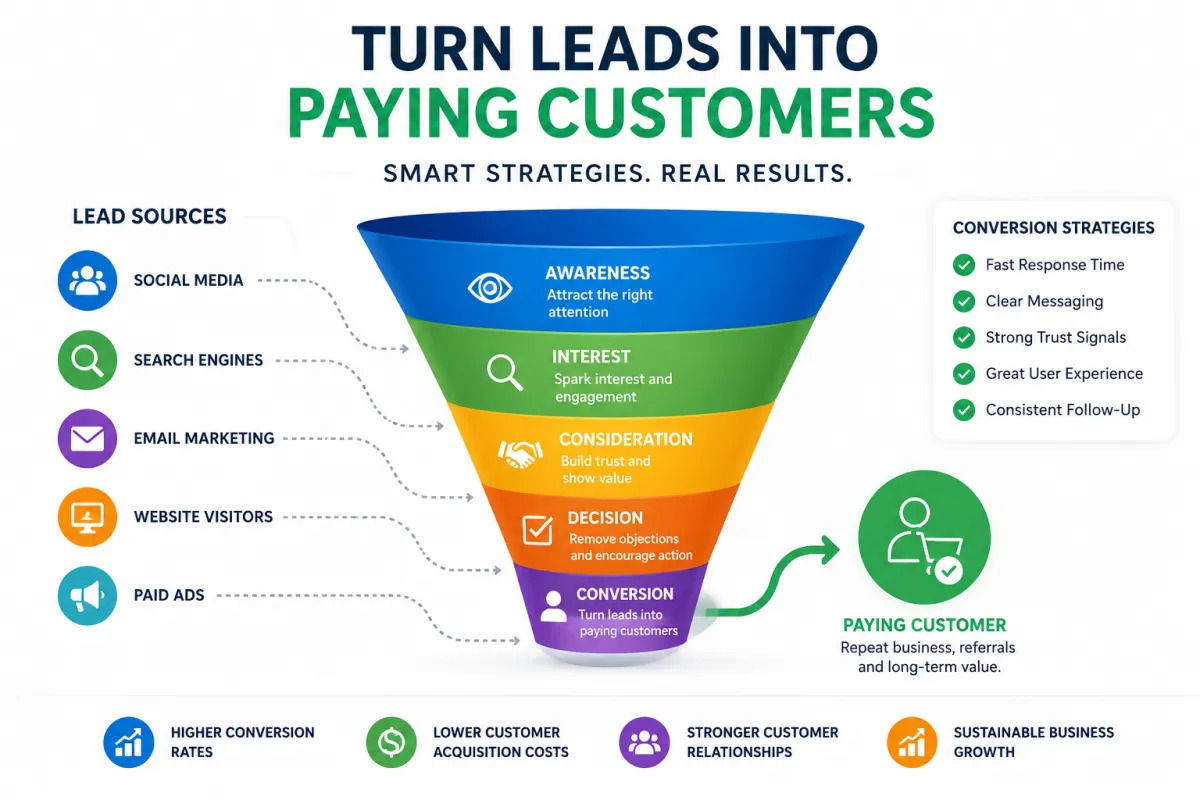
Creating a Conversion-Focused Sales Funnel
A successful sales funnel moves customers step-by-step toward a decision.
Awareness Stage
Educational blogs and SEO content attract attention.
Consideration Stage
Reviews, comparisons, and helpful resources build trust.
Decision Stage
Clear offers and calls-to-action encourage conversion.
Every stage should guide users naturally toward the next step.
For a stronger system, review ourlead generation funnel services.
Common Mistakes That Hurt Conversion Rates
Ignoring Mobile Users
Most traffic now comes from mobile devices.
Weak Calls-to-Action
If visitors don’t know what to do next, they leave.
Overcomplicated Forms
Too many fields reduce submissions.
Lack of Follow-Up
Many businesses give up after one contact attempt.
Avoiding these mistakes often leads to immediate improvement.
How Data Helps Improve Conversion Strategy
Tracking user behavior reveals where leads are dropping off.
Useful metrics include:
Bounce rate
Time on page
Form submissions
Click-through rates
Small changes based on real data often produce major results.
Frequently Asked Questions
What is a good lead conversion rate?
It varies by industry, but improving even small percentages can significantly increase revenue.
Why are my leads not converting?
Common reasons include poor follow-up, weak trust signals, or unclear messaging.
How important is response time?
Very important. Faster responses typically lead to higher conversion rates.
Does website design affect sales?
Yes. User experience directly impacts trust and conversions.
Final Thoughts
Generating leads is only half the battle.
The businesses that grow consistently are the ones that understand how to turn attention into action and leads into customers.
By improving trust, follow-up, messaging, and user experience, you can increase conversions without constantly spending more on advertising.
If you’re ready to improve your marketing performance, explore howTop Choice Marketers helps businesses create smarter conversion systems that generate real results.
